For centuries, people have cast words into the sea. A “message in a bottle” might sound like a romantic gesture, but its origins are surprisingly practical—and always deeply human.
Ancient experiments
The first recorded bottles were tossed into the sea by the Greek philosopher Theophrastus more than 2,000 years ago. He wanted to prove the Mediterranean was fed by the Atlantic Ocean, so he sent sealed bottles adrift to study the currents.
Sailors and survival
Shipwrecked sailors or stranded castaways often entrusted their fate to bottles, scratching out desperate notes in the hope someone, somewhere, might find them and send help. Sometimes those bottles carried coordinates, last words, or a plea to tell families what had happened.
Wartime signals
Naval officers also used bottles to send coded reports across enemy waters. Even in times of danger, a bottle was a vessel of trust—slim hope protected by glass.
Romantic gestures
By the 16th century, bottles weren’t only for survival. Lovers separated by war, duty, or distance would sometimes commit their feelings to the sea, believing that if the letter reached no one else, at least the ocean had heard their truth.
Modern poetry
In 1979, Sting and The Police turned the idea into a modern anthem of loneliness: a castaway sending out his cry for connection, only to discover “a hundred billion bottles washed up on the shore.” The message was clear—none of us is truly alone in our longing.
Why it still resonates
At heart, a message in a bottle is about words we can’t keep inside, but don’t yet know who will hear. It’s about bottling things up—and the relief that comes when they’re finally released.
And that’s where notes still matter today.
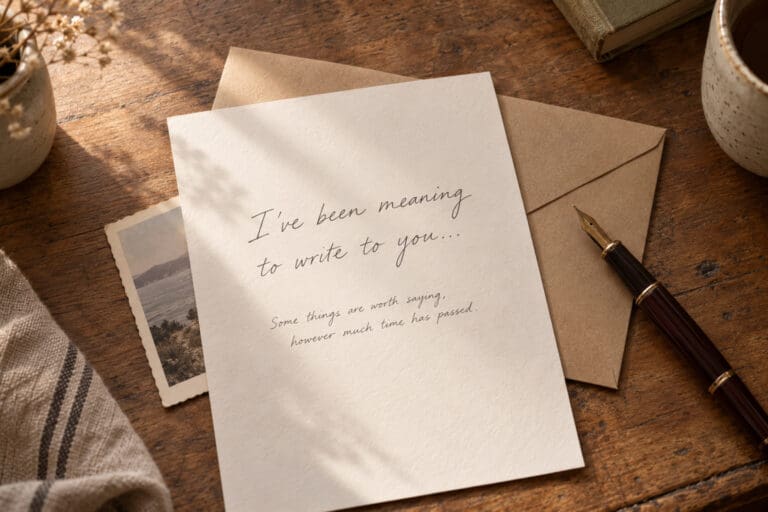
Sometimes it’s not the sea that carries them, but paper, a card, or even a few lines written down for someone we love. The right words can still rescue, reassure, or reach across distance.
Because when a note is written, it can make all the difference.