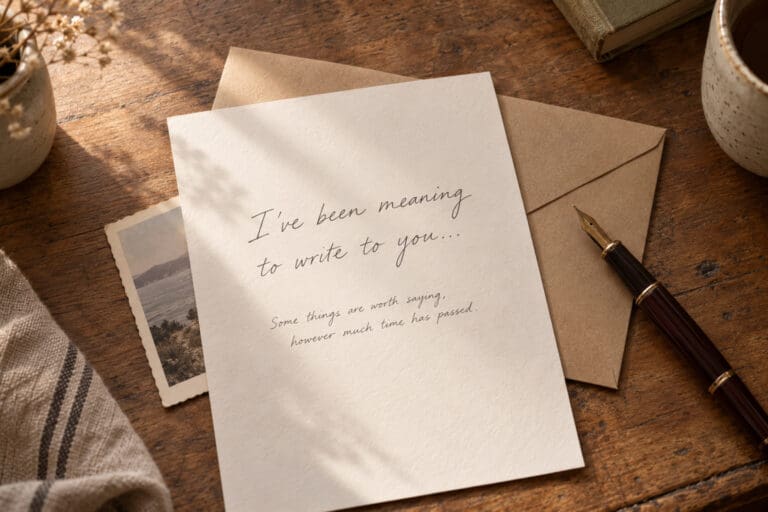
Some messages arrive like tiny beams of light, slipping through the cracks of an ordinary day. They’re short, they’re simple, and they often take less than a minute to write. But their effect can be huge. A single positive line can soften someone’s mood, steady their nerves, lift their confidence or simply remind them that they matter.
We live in a world where people often say they don’t know what to write. They overthink it, worry about tone, fear being too much or not enough. Yet if you look at the messages people actually send each other, the ones that stay with us tend to be the uncomplicated ones. The lines that feel natural. Human. Easy to receive.
These are some of the most common positive lines people send, why they work and how they’re used in everyday life. You’ll recognise many of them. You may have sent a few yourself.
1. “Thinking of you.”
Possibly the simplest and most universal positive message of all. It’s short, safe, warm and never intrusive.
How it’s used:
- When someone is going through a tough patch and you don’t want to pry.
- On anniversaries or difficult days where words fail but presence matters.
- As a gentle nudge to reconnect without expectation.
Why it works:
It offers comfort without pressure. You’re not asking for anything, you’re not expecting a reply, you’re simply saying, “You’re on my mind and you matter.” Sometimes that’s the line that gets someone through the afternoon.
2. “Hope today is kind to you.”
A modern twist on wishing someone well. It acknowledges that life can be unpredictable while still offering optimism.
How it’s used:
- Early morning messages to friends before a big meeting, exam or life event.
- When someone has had a rough stretch and needs a little hope.
- As a soft alternative to “Good luck,” especially for those who don’t like pressure.
Why it works:
It focuses on kindness, something most people don’t get enough of. It sets a tone for the day: gentle, supportive and quietly uplifting.
3. “You’ve got this.”
One of the most common confidence-boosters of the last decade. It’s become a modern mantra and people lean on it more than they admit.
How it’s used:
- Before someone faces something they’re dreading – interviews, hospital appointments, speeches.
- When a friend doubts themselves.
- When you want to offer courage but without being overly sentimental.
Why it works:
It’s punchy and empowering. It says, “I believe in you,” without any fuss, and that belief can be contagious.
4. “I’m proud of you.”
A tiny line that lands deeply, even for adults. Especially for adults.
How it’s used:
- After a milestone or personal achievement: promotions, moving house, finishing something difficult.
- When someone is quietly struggling but still showing up.
- When you want to recognise effort, not outcome.
Why it works:
Many people rarely hear this sentence. When it comes from someone they trust, it can be transformative. A reminder that someone sees them, really sees them.
5. “Let me know if you need anything.”
A classic line, but still one of the most reassuring.
How it’s used:
- When someone is unwell or overwhelmed.
- In moments of loss or uncertainty.
- As a follow-up after a difficult conversation.
Why it works:
It keeps the door open. Even if they don’t take you up on it, knowing the offer is there eases the weight they’re carrying. And sometimes just knowing they could ask is a comfort in itself.
6. “You made my day.”
A small expression with big emotional impact.
How it’s used:
- After a kind gesture or a helpful message.
- When someone’s humour or thoughtfulness lifted your mood.
- To reinforce positive behaviours in a light, friendly way.
Why it works:
People like to know they matter. This line tells them their presence or actions have real weight, even in small moments.
7. “Take care of yourself.”
A line that feels caring without overstepping.
How it’s used:
- When someone is burning the candle at both ends.
- After they’ve shared something stressful.
- As a sign-off when you want warmth without emotional overload.
Why it works:
It offers kindness without being dramatic. It gently reminds the other person that their wellbeing is important.
8. “Here if you need me.”
Similar to “Let me know if you need anything,” but slightly more intimate.
How it’s used:
- With close friends or family after hard news.
- When you want someone to feel supported but not crowded.
- As a message that asks nothing in return.
Why it works:
It communicates stability and reliability. It says, “You’re not alone,” in the simplest possible way.
Why these little lines matter more than we think
Most people underestimate the impact of a message because it seems too small to matter. But here’s the truth: people remember how you made them feel, not how elaborate your message was.
A single line can:
- change someone’s mood
- interrupt a spiral of worry
- make a lonely day feel less empty
- remind someone they’re valued
- help them feel brave
- create a sense of connection that lasts long after the notification disappears
And the beauty of a short, positive line is that you don’t need to wait for the right moment. They fit into the everyday rhythm of life. They weave warmth into the ordinary, and they show people that the connection between you is alive.
How to choose the right line
Ask yourself one simple question: What feeling do I want to give them?
Comfort? Confidence? Encouragement? Warmth? Reassurance? Presence?
Once you know that, choose the shortest line that gives that feeling.
There’s no need to overcomplicate it. In fact, the simpler the message, the clearer the sentiment.
A gentle encouragement to send that line
If someone pops into your mind, that is often reason enough to send a message. People crave connection, even if they don’t say it. And positive lines are safe, light, and always welcome.
One line can brighten a day.
One line can say “I’m here.”
One line can change the way someone feels about themselves or the world.
Your words don’t need to be perfect. They just need to be sent.